
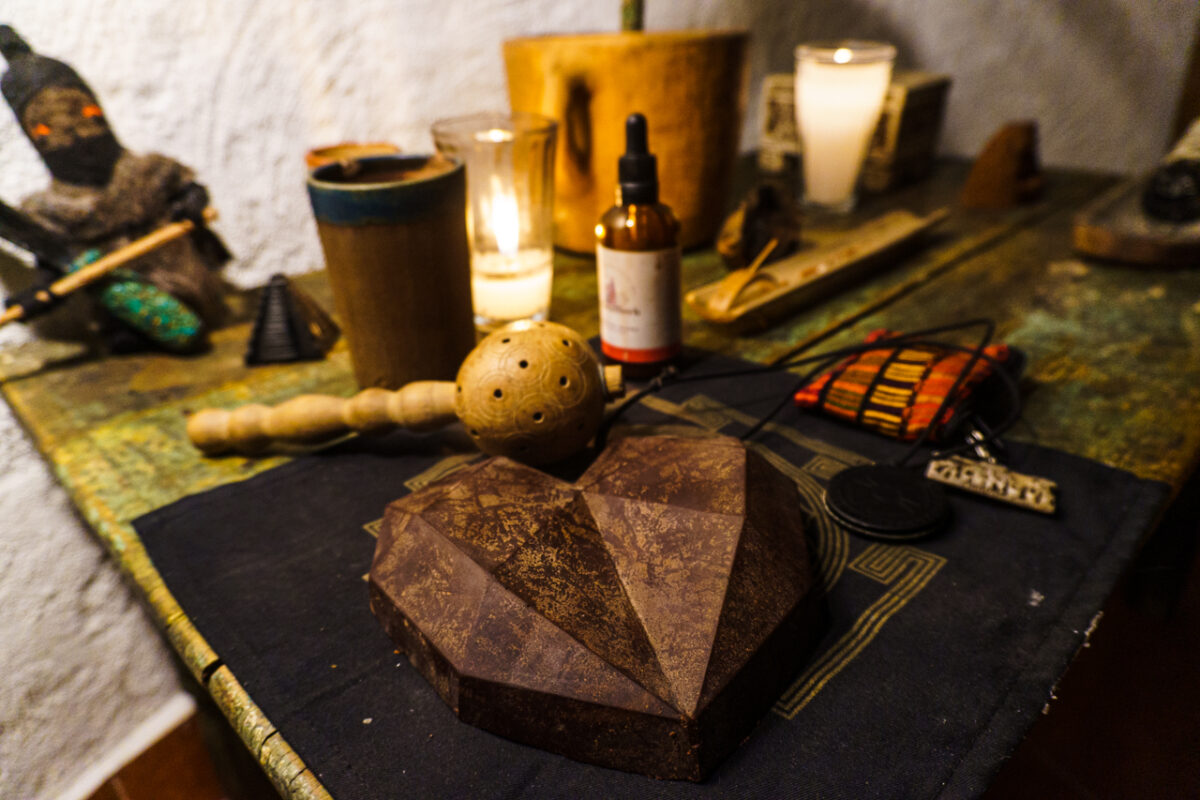
A few years ago I went into the plant medicine world looking to train. I wanted to learn how to hold ceremony, how to work with medicines, how to guide people through the kinds of experiences that were changing lives.
I came out of it wanting to build an alternative.
That’s not a simple story, and I don’t tell it to condemn a world that has helped many people. I tell it because what I found in those circles, the gaps, the risks, the unanswered questions, is the direct reason I developed the ceremonies I hold today. And if you’re drawn to plant medicine work but something in you is hesitating, you deserve to hear the honest version.
What People Are Looking For
The surge in interest around ayahuasca, bufo (5-MeO-DMT), psilocybin, and other plant medicines is telling us something important. People are not chasing a drug experience. They’re searching for a shift: a break in the pattern, a different view of their life, access to something in themselves they can feel but can’t reach through ordinary means.
Depression that therapy hasn’t touched. Patterns that keep repeating despite every effort to change them. A sense that there’s more available than what daily life is delivering. The medicine world promises access to all of it, and for many people that promise is real.
The problem is not the desire. The desire is legitimate. The problems live in how that desire is being met.
What I Found When I Went Looking
I entered this world with an open heart and a clear intention. I left it with a much more complicated picture.
Unqualified facilitators holding space for vulnerable people. The popularity of plant medicine ceremonies has created a market that moves faster than any meaningful training or accountability structure can follow. The title of “shaman” or “medicine holder” carries no regulatory weight in most countries. I sat in circles led by people whose primary qualification was their own experience of the medicine. That is not nothing, but it is not enough when you are responsible for the psychological and physical safety of 30 people in an altered state.
Ceremonies built for volume, not for people. The economics of retreat centers create pressure to fill rooms. I attended ceremonies where the group was too large for any facilitator to track what was happening to individuals. When someone goes into crisis (and people do go into crisis) in a group of 40, the support is thin. The container that ceremony requires is fragile at that scale.
Real physical risks that don’t get enough airtime. Deaths have occurred at ayahuasca ceremonies, some from contraindicated medications, some from cardiac events, some from the handling of acute psychological crises by people not equipped for them. Bufo (5-MeO-DMT) carries one of the highest risk profiles of any psychedelic substance. The intensity of a full-release experience can be physiologically and psychologically overwhelming in a way that requires sophisticated support. These are documented, real risks, and the ceremonies I attended did not treat them with adequate seriousness.
The expense and uncertainty of the whole pursuit. Ayahuasca retreats in Peru or Costa Rica cost anywhere from $1,500 to $10,000 for a week. There is no standardized vetting process, no reliable way to evaluate a facilitator’s competence before you put your nervous system in their hands. You are making a significant financial and personal bet with limited information.
And then the silence after. You return from the experience changed, or cracked open, or confused, or all three. The retreat ends. The integration support is often minimal. A single integration call. A WhatsApp group. Whatever you can find on your own. The medicine opened something and nobody helped you understand what to do with it next.
I watched people return from powerful experiences and, within months, slip back into the same patterns the experience had briefly illuminated. The door had opened. Nobody had shown them how to walk through it. Without a practice, it closed again.
What I Built Instead
I want to be precise about what cacao is and is not, because the framing matters.
Cacao is a plant medicine. It is subtle compared to ayahuasca or bufo, but subtle does not mean weak. Theobromine opens the cardiovascular system and increases blood flow to the brain. Anandamide, the bliss molecule, circulates longer after cacao consumption because cacao inhibits the enzyme that breaks it down. Phenylethylamine triggers dopamine and norepinephrine release. Magnesium relaxes the nervous system and modulates the stress response at the level of the HPA axis.
These are not metaphors. These are measurable physiological events that prepare the body and mind for something real.
Cacao alone produces a shift. Add structured breathwork and you add a second layer: cardiovascular activation from the outside meeting the cardiovascular opening cacao produces from the inside. Add sound at specific frequencies, at specific BPM progressions tuned to the arc of the practice, and you create a third layer: the nervous system responds to sonic architecture in ways that support exactly the states the practice is moving through.
Add journaling at the right point in the arc, built into the ceremony as a structured integration practice rather than an afterthought, and you give the shift somewhere to land.
From my experience, this combination, held in the right container, produces internal shifts, deep realizations, and a changed perspective on past patterns and traumas that is comparable to what I witnessed in far more intense medicine circles. I have held space for people who cried in recognition for the first time in years, who saw clearly the story they’d been telling themselves about a relationship or a career or a version of themselves, who walked out of a session carrying something that had changed.
Without the physical risk. Without the expense of a retreat in another country. Without the uncertainty of who is holding the space.
The Four Elements and How They Work Together
Ceremonial Cacao is the foundation. Consumed intentionally, at a dose that produces its full physiological effects, cacao softens the defended self before the breathwork begins. The heart opens. The walls come down a degree. The body’s chemistry shifts toward receptivity.
Breathwork is the engine. The RISE Method framework guides practitioners through a deliberate arc: Root, which grounds the nervous system before anything more demanding is asked of it; Ignite, which uses Breath of Fire to activate and train the body’s capacity to stay present inside intensity; and Surrender, which uses extended breath-hold work to access the stillness where real inner work happens. The breath creates the altered state from the inside out, with cacao as the only external substance.
Sound wraps every phase. I design the sonic architecture of each ceremony deliberately: BPM progressions that guide the nervous system through activation and into deep rest, solfeggio frequencies that support specific states, binaural beats layered beneath the music to reinforce the depth. The music is not background. It is a tool.
Journaling closes the loop. At the point in the ceremony when the breath practice has completed and the nervous system is in its most open, receptive state, writing becomes something different than it is at a desk on an ordinary afternoon. Insights that arrived during the practice need a place to land. The journal is that place: a structured reflection practice that bridges the altered state and the ordinary life waiting on the other side of the door.
The Integration Problem, and the Deeper Solution
The plant medicine world has a structural flaw at its center, and it is rarely named clearly.
Powerful psychedelic experiences open perceptual doors. The person who goes into a ceremony is not the same person who comes out. But the insights, the realizations, the sudden clarity about a life pattern or a relationship or a long-held belief: these are not changes. They are the raw material for change. The change itself requires something else: continued practice, deliberate integration, the daily or weekly return to the work.
Medicine is often sold as the cure. Ceremony after ceremony after ceremony, each one promising a deeper healing, a greater breakthrough. Some people chase that experience for years and remain exactly where they were. The breakthrough keeps arriving and nothing in the life shifts.
The insight is not the shift. The insight points at the shift. The shift happens through practice.
Cacao and breathwork are practices in a way that a single ayahuasca ceremony is not. You can return to them tomorrow. You can return to the same internal space you touched in ceremony, not by chasing another peak, but by building a relationship with the practice that makes that space more and more accessible. Weekly, you drop back into the work. You return to what the last session surfaced. You take another step.
This is what I mean when I say the ceremonies I hold are not events. They are initiations into a practice. The ceremony opens the door. The practice is how you walk through it, again and again, until you’re living on the other side.
What the Ceremony Experience Looks Like
My cacao ceremonies combine all four elements in a structured arc that typically runs two to three hours.
Participants receive ceremonial-grade cacao approximately 25 minutes before the breathwork begins, during a grounding and intention-setting period. The opening circle creates the container: a clear sense of where we are, what we’re doing, and why. Intentions are set, not as performance but as a direction for the practice.
The breathwork moves through the RISE arc with music engineered for each phase. The Ignite phase brings people face to face with their own capacity to stay present inside intensity. The Surrender phase delivers the stillness. The Emerge landing brings the nervous system back to baseline in a way that feels different from how it started.
Journaling follows immediately, while the nervous system is still open. Specific prompts guide the reflection rather than leaving people staring at a blank page.
A closing circle completes the experience: space for what arrived, held by a group that has moved through the arc together.
Who This Is For
If you’ve been drawn to plant medicine work but something in you is cautious about safety, cost, or the uncertainty of who is holding the space, come and experience what cacao and breathwork can do before making a decision that carries more risk.
If you’ve already done ceremony work with more powerful medicines and felt the integration gap firsthand, the ceremonies I hold are designed for continued practice: a sustainable way to keep returning to the work without needing to travel to another country or put your nervous system in a stranger’s hands.
If you practice breathwork or drink cacao and want to experience what a full ceremony container changes about both practices, this is that experience.
The shift is available. The practice is accessible. The integration is built in.
Ready to Experience It?
If you want to understand the nervous system science behind why this combination works before attending a ceremony, start with the free masterclass. One session covering the full framework.
Watch the Free Nervous System Masterclass →
The RISE 22-Day Program gives you the daily practice structure that makes everything the ceremony opens sustainable over time.
[Start the RISE 22-Day Program →]
For information on upcoming cacao ceremonies, workshops, and live events, visit the ceremonies page.
[View Upcoming Ceremonies →]
A note on practice. The breathing techniques and physiological information in this article are educational and not a substitute for medical advice. Breathwork includes intense breathing patterns and breath holds that are not appropriate for everyone. If you are pregnant or have a cardiovascular, respiratory, or psychiatric condition, consult a qualified healthcare provider before practicing. Read our full Medical Disclaimer.