

You know that feeling when you hold your breath and the urge to inhale becomes almost unbearable?
That urge has nothing to do with running out of oxygen. Your blood oxygen levels are still fine. What’s rising is CO2 (carbon dioxide), and your body is treating it as an emergency.
For most people, that alarm fires fast and loud. Training that threshold, raising the point at which your body panics, is one of the most underrated things you can do for your health, your mind, and how you show up in every area of your life.
What CO2 Tolerance Is
Breathing takes in oxygen and produces CO2 as a byproduct. The CO2 builds up in your blood and triggers the urge to breathe again. This system works through chemoreceptors in your brainstem: sensors that monitor CO2 levels and sound the alarm when they rise too high.
The threshold matters. What counts as “too high” varies enormously between people, and that variation determines a lot about how calm or anxious you feel on a daily basis.
Someone with high CO2 tolerance has a calibrated alarm. Rising CO2 registers as a mild signal. They stay composed when things get hard, recover from stress faster, and don’t feel overwhelmed by physical or emotional pressure.
Someone with low CO2 tolerance has a hair-trigger alarm. Their brainstem starts firing an emergency signal at relatively normal CO2 levels. This shows up as anxiety, shallow breathing, a low threshold for overwhelm, and a stress response that arrives before the actual stress does.
The research on this is extensive. Studies published in PubMed found that panic disorder patients show increased brainstem activation in response to rising CO2 compared to healthy controls. Their brains treat normal CO2 fluctuation as a threat. This is a miscalibrated sensor, not a character flaw or a weak mind. Sensors can be recalibrated.

Why This Matters Beyond the Breath Hold
Most people think of anxiety as a mental problem. Something in the thoughts, the stories, the patterns. Those things matter. But underneath all of it sits a nervous system running its own software, and CO2 sensitivity is a core feature of that software.
A low CO2 threshold means your body triggers a low-grade stress response regularly, in situations that don’t warrant one. A tense meeting. A difficult conversation. A moment of uncertainty about a decision. The brainstem reads the slight shift in breathing that accompanies any of these and starts escalating before you’ve had a chance to think.
Training CO2 tolerance changes that baseline. The alarm raises its own threshold. The same situations that used to trigger a stress cascade start to pass without one.
What It Changes in Practice
At work. The quality of decisions made under pressure depends on how the nervous system handles pressure. A low CO2 threshold means that as the stakes in a conversation or a decision rise, so does the physiological stress response, narrowing thinking, shortening the planning horizon, pushing toward reactive choices. A higher threshold keeps the prefrontal cortex online longer: the part of the brain responsible for complex thinking and judgment. You stay in the problem rather than pulling back from it.
In relationships. Reactivity in relationships, the snap, the shutdown, the argument that escalates before either person understands what happened, is usually the nervous system arriving before the words do. CO2 tolerance training reduces this. The gap between trigger and response widens. You get a few extra seconds that change everything about what comes out of your mouth.
In your sex life. Anxiety and sexual performance don’t coexist. The same sympathetic activation that fires during a CO2-triggered stress response actively suppresses the physiological conditions for arousal and connection. A nervous system that handles pressure with less alarm is a body that stays present rather than bracing. This is not a side benefit. For many people, it’s the most immediate one.
In creative work. Access to genuine creativity requires a nervous system that feels safe enough to explore without certainty. Low CO2 tolerance keeps a background alarm running that narrows thinking toward safety and familiarity. As that alarm quiets, creative range expands. Ideas can be followed into unfamiliar territory without the body pulling back.
Over time. Research shows that consistent breath training improves heart rate variability, the most reliable measure of nervous system flexibility and long-term cardiovascular health. Higher HRV is associated with better stress recovery, stronger immune function, lower inflammation, and longer healthspan. CO2 tolerance training is longevity training too.
How to Train It
The mechanism is simple: controlled, repeated exposure to rising CO2 teaches the brainstem to respond to it with less alarm.
Nasal breathing during exertion. The nose filters, warms, and slows air. Breathing through the nose during exercise allows CO2 to build slightly, expanding tolerance over time without any special technique. Switching from mouth breathing to nasal breathing during low-to-moderate intensity activity is the single easiest entry point.
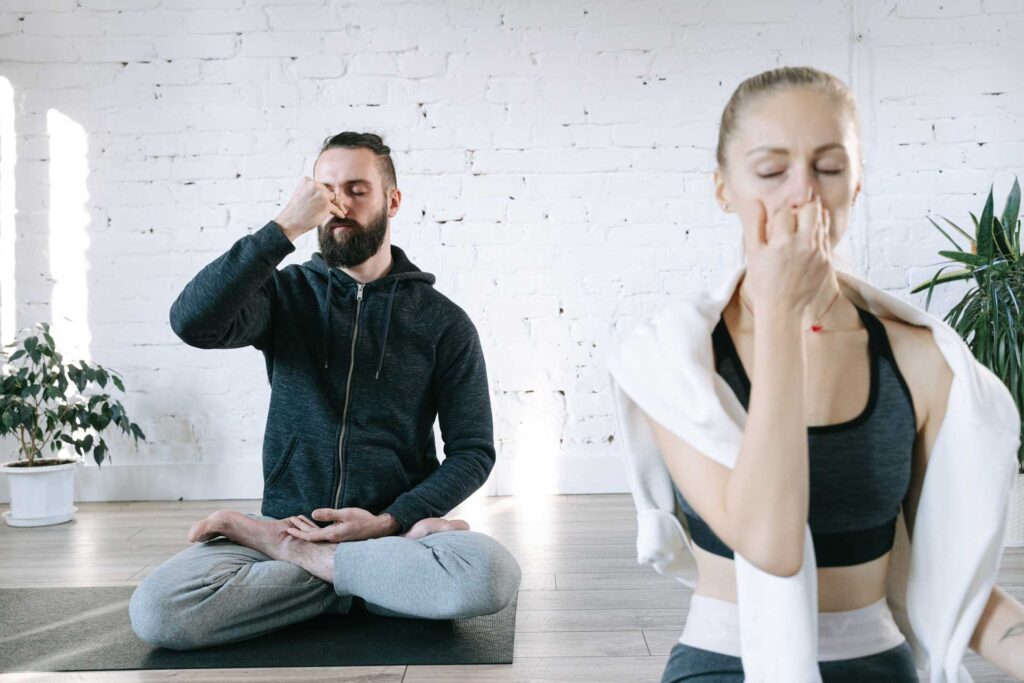
Breath holds. After a normal exhale, hold the breath and sit with the rising urge to inhale. Sit at the edge rather than pushing to distress. Let the discomfort build without responding to it, then breathe calmly. This is direct CO2 tolerance training. Over time, the threshold rises noticeably. Patrick McKeown’s research points to measurable CO2 tolerance gains within one to two weeks of consistent practice.
Breath of Fire. The rapid nasal breathing pattern used in the Ignite phase of structured breathwork is not just an activation tool. The rapid exhalations shift CO2 quickly, and consistent practice builds the body’s resilience to those fluctuations. Practitioners who train Breath of Fire regularly tend to report fewer anxiety symptoms as a result.
A Simple Test
Sit quietly. Take a normal breath in through your nose, then a relaxed exhale. At the bottom of the exhale, hold. Time how long you can sit comfortably before the urge to breathe becomes strong. This is not the maximum hold. It’s the comfortable limit.
Under 20 seconds is common. Under 10 suggests significant CO2 sensitivity. Over 40 indicates a well-trained system.
Run this test weekly. Improvement here tracks with reduced anxiety and improved stress recovery. It’s one of the clearest windows into how the nervous system is adapting.
A note on practice. The breathing techniques and physiological information in this article are educational and not a substitute for medical advice. Breathwork includes intense breathing patterns and breath holds that are not appropriate for everyone. If you are pregnant or have a cardiovascular, respiratory, or psychiatric condition, consult a qualified healthcare provider before practicing. Read our full Medical Disclaimer.